
How Fintech APIs Work: Fintech APIs are the invisible engines that power modern digital banking, payments, lending, and investment platforms. They act as secure bridges, allowing apps and systems to exchange financial data, execute transactions, and verify user identities in real time. Understanding how these APIs work is essential for any fintech company, developer, or business planning to integrate financial services into their products. This article explains the technical workings of fintech APIs, their benefits, and how they can be integrated into scalable, secure financial platforms.
What Are Fintech APIs?
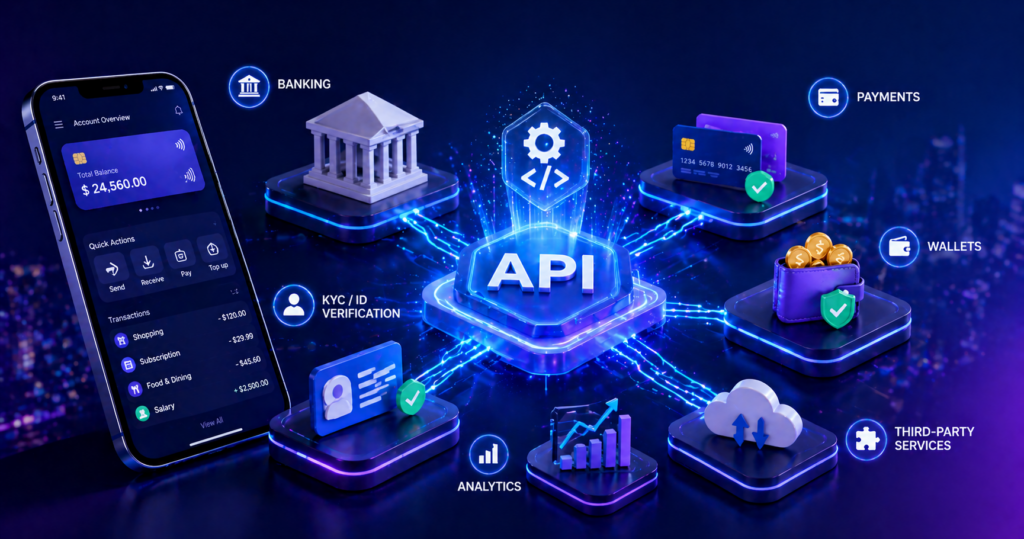
A fintech API (Application Programming Interface) is a set of protocols and tools that enable software applications to communicate with financial systems. These APIs allow fintech apps to request data or perform actions such as checking account balances, processing payments, verifying bank details, or initiating transfers. Instead of building banking infrastructure from scratch, companies can leverage APIs to connect to existing financial networks and banks.
Fintech APIs are widely used in payment gateways, lending platforms, investment apps, and open banking services. They standardize how financial institutions and third-party services interact, making it easier to build new products and expand services to more users.
How Fintech APIs Work
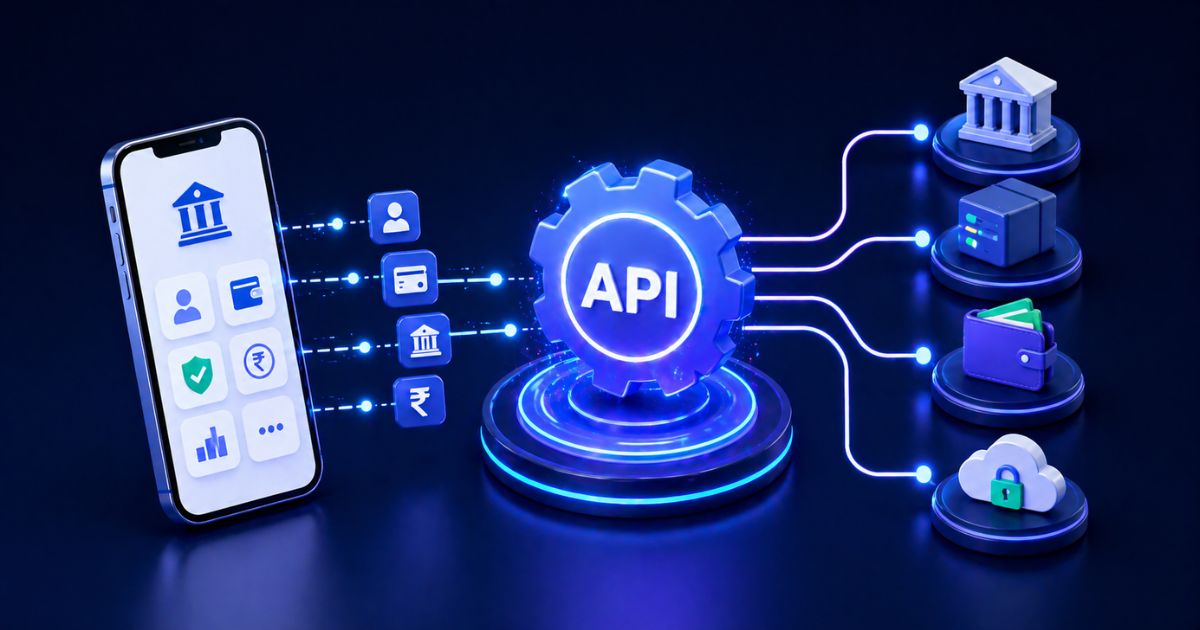
Fintech APIs operate through a simple request-response cycle. When a user performs an action—like making a payment or checking a balance—the app sends a request to the API. The API then communicates with the relevant financial system, such as a bank or payment processor, and retrieves or executes the required function. The result is returned to the app in a machine-readable format, typically JSON or XML.
Security is built into every step of this process. Fintech APIs use encrypted connections (HTTPS/TLS), authentication tokens, and strict access controls to protect sensitive financial data. Many platforms also implement rate limiting and monitoring to prevent abuse and ensure reliability.
read more: What is White Label Fintech Software? Launch Your Own Fintech Brand Faster in 2026
Types of Fintech APIs
There are several types of fintech APIs, each designed for specific use cases:
- Payment APIs enable processing card payments, UPI transactions, and digital wallets.
- Banking APIs allow account verification, balance checks, and transaction history access.
- Lending APIs support credit checks, loan eligibility assessments, and repayment processing.
- Wealth and Investment APIs facilitate portfolio management, trading, and risk analysis.
Each API follows standardized protocols like REST or GraphQL, ensuring compatibility across different platforms and environments.
Key Benefits of Fintech APIs
Fintech APIs accelerate product development by providing pre-built financial infrastructure. Instead of investing time and resources into building complex banking systems, companies can integrate existing APIs to launch services quickly. This reduces time-to-market and lowers operational costs.
Scalability is another major advantage. Fintech APIs can handle thousands of transactions simultaneously, making them ideal for high-growth platforms. They also enhance security through built-in encryption, tokenization, and compliance with regulations like PCI-DSS and GDPR.
read more: How to Become a Fintech Agent in 2026: Build a Smart Digital Income Business with Low Investment
Security and Compliance in Fintech APIs
Security is critical in fintech, and APIs must adhere to strict standards. Most fintech APIs use OAuth 2.0 and OpenID Connect for secure authentication, along with short-lived tokens and role-based access controls. Data is encrypted in transit and at rest, and sensitive information is never stored in plaintext.
Compliance with financial regulations is another priority. APIs must support audit trails, logging, and reporting features to meet regulatory requirements. Many fintech providers also implement fraud detection and monitoring tools to detect suspicious activity in real time.
Integration Process for Fintech APIs
Integrating fintech APIs into an existing platform involves several steps. First, developers obtain API keys and credentials from the provider’s dashboard. Next, they configure the API endpoints and set up authentication using secure methods like JWT or OAuth.
Testing is crucial before going live. Many fintech providers offer sandbox environments where developers can simulate transactions and verify functionality. Once testing is complete, the API can be deployed in production, with monitoring tools tracking performance and error rates.
read more: Best Low Investment Business Ideas in 2026: Smart Income Models You Can Start with Small Capital
Scalability and Performance Optimization
To handle high transaction volumes, fintech APIs are designed with performance in mind. Cloud-native architectures and containerization allow APIs to scale horizontally across multiple servers. Microservices-based designs ensure that individual components can be updated or scaled independently.
Caching frequently accessed data, implementing load balancing, and optimizing database queries further improve performance. Many fintech API providers also offer analytics dashboards to monitor response times, latency, and error rates.
Real-World Use Cases of Fintech APIs
Fintech APIs are used in a wide range of applications. Payment gateways integrate card processors and UPI systems to enable seamless checkout experiences. Lending platforms use APIs to verify income, credit scores, and bank details for instant loan approvals.
Investment apps leverage APIs to connect to stock exchanges and execute trades on behalf of users. Open banking platforms aggregate data from multiple banks, providing users with a unified view of their finances. These use cases demonstrate how fintech APIs power innovation across industries.
Choosing the Right Fintech API Provider
When selecting a fintech API provider, businesses should consider factors like security, reliability, compliance, and support. The provider should offer robust documentation, SDKs, and developer tools to simplify integration.
Scalability and uptime are also important. Providers with global data centers and redundant infrastructure ensure low latency and high availability. Before committing, companies should evaluate pricing models, transaction limits, and support for local regulations.
Future Trends in Fintech APIs
The fintech API landscape is evolving rapidly. Open banking regulations are expanding access to financial data, enabling more personalized services. AI-powered APIs are emerging, offering fraud detection, risk assessment, and automated investment recommendations.
Blockchain and decentralized finance (DeFi) are also influencing API development, with new protocols enabling cross-border payments and smart contract integrations. As fintech continues to grow, APIs will play an increasingly central role in shaping the future of finance.
FAQ
Q: What is a fintech API?
A fintech API is a set of tools that allows software applications to interact with financial systems, enabling features like payments, account verification, and lending.
Q: How do fintech APIs ensure security?
Fintech APIs use encrypted connections, token-based authentication, and strict access controls to protect sensitive financial data.
Q: Can any business use fintech APIs?
Yes, businesses of all sizes can integrate fintech APIs to add financial services to their platforms, provided they meet security and compliance requirements.
Q: Are fintech APIs easy to integrate?
Most providers offer clear documentation, SDKs, and sandbox environments to simplify integration for developers.
Q: What are the benefits of using fintech APIs?
Fintech APIs reduce development time, lower costs, improve scalability, and enhance security for financial applications.
Why Choose CREDVIA for Fintech API Integration?
CREDVIA offers cutting-edge fintech API solutions designed for speed, security, and scalability. With robust payment, lending, and banking APIs, CREDVIA empowers businesses to build innovative financial products quickly. The platform supports global standards, ensuring compliance with regulations and seamless integration across regions.
CREDVIA’s API suite includes advanced fraud detection, real-time monitoring, and developer-friendly tools to streamline integration. Whether you’re launching a payment gateway, lending platform, or investment app, CREDVIA provides the infrastructure to succeed.
Call to Action:
Ready to transform your business with fintech APIs? Partner with CREDVIA today and unlock the power of secure, scalable financial technology. Visit credvia.org to explore our API solutions and start building the future of finance.
This article provides a comprehensive overview of how fintech APIs work, their benefits, and how they can be integrated into modern financial platforms. By leveraging these technologies, businesses can innovate faster, reduce costs, and deliver seamless experiences to their users.